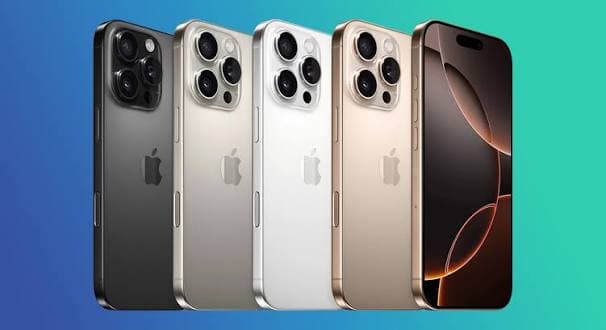
Verdict at a glance
Apple iPhone 16 Pro — rated good at 84/100
The iPhone 16 Pro was the generation where Apple finally stopped rationing its best camera hardware to the Pro Max. The 5x tetraprism telephoto that was exclusive to the bigger phone for two years came to this 6.3-inch model too, alongside a new 48 MP ultra-wide, four studio-quality microphones and a main sensor capable of 4K120 Dolby Vision. Camera Control and the Action Button both debuted this generation across the whole lineup, ProMotion and titanium carry over from the 15 Pro, and the A18 Pro comfortably out-benches every 2024 Android flagship. None of that saved it from being discontinued a year later when the iPhone 17 line arrived — Apple pulled it from sale entirely rather than discounting it the way it did the standard 16 — but as a used or carrier-stock purchase today, it remains a genuinely capable phone let down mainly by charging speeds and a camera system since matched, then exceeded, by its successor.
- Price:
- $999
- Maker:
- Apple
Apple launched the iPhone 16 Pro on 20 September 2024 at $999 for 128 GB, $1,099 for 256 GB, $1,299 for 512 GB and $1,499 for 1 TB; the 6.9-inch iPhone 16 Pro Max started at $1,199 for 256 GB, rising to $1,399 and $1,599 for 512 GB and 1 TB. When the iPhone 17 line launched in September 2025, Apple discontinued both 16 Pro models outright — unlike the standard iPhone 16, which was simply cut to $699, the Pro line was removed from Apple's own store entirely. It is no longer sold new by Apple, though carrier and retailer stock cleared through late 2025, and it now circulates on the used and refurbished market, typically $550–$750 depending on storage and condition.
+Pros
- The 5x tetraprism telephoto reaches the smaller Pro for the first time, no longer a Pro Max exclusive
- New 48 MP ultra-wide with autofocus is a real upgrade over the 15 Pro's fixed-focus 12 MP unit
- A18 Pro leads every 2024 Android flagship in Geekbench 6 — 2,899 single-core, 7,784 multi-core
- 14 h 17 m GSMArena Active Use score is a class-leading result from a modest 3,582 mAh cell
- Camera Control and the Action Button give the Pro two genuinely useful customizable hardware controls
- Titanium frame, ProMotion 120Hz and an always-on display all carry over from the 15 Pro
−Cons
- Discontinued by Apple entirely when the iPhone 17 launched — no longer sold new, only used or leftover stock
- Charging is slow even by iPhone standards: 58% at 30 minutes, full charge takes 1 h 38 m with a 45 W adapter
- Camera Control's force-sensing gestures were inconsistent at launch and needed several software passes to settle
- No vapor chamber — sustained gaming and long 4K120 recording sessions throttle and run warm
- Front camera stays at a basic 12 MP with no autofocus improvements, unlike the front camera update a generation later
01Price, availability and a discontinuation the base model didn't get
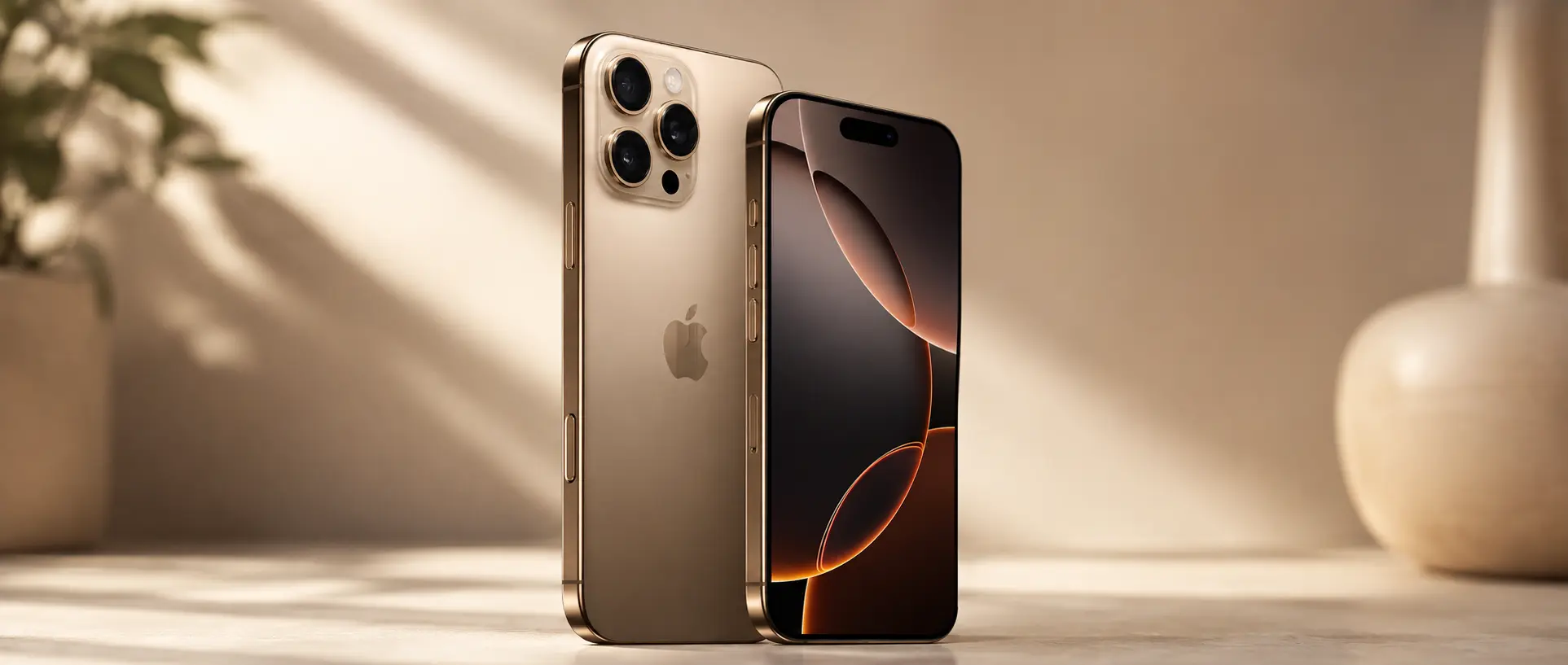
Apple announced the iPhone 16 Pro on 9 September 2024 and put it on sale on 20 September, priced at $999 for 128 GB, $1,099 for 256 GB, $1,299 for 512 GB and $1,499 for 1 TB. The larger 6.9-inch iPhone 16 Pro Max started at $1,199 for 256 GB — it never offered a 128 GB tier — rising to $1,399 and $1,599 for 512 GB and 1 TB. Both shipped in Black, Natural, White and Desert Titanium.
That pricing held for exactly one year. When the iPhone 17 series launched in September 2025, Apple treated the two 16-series lines very differently: the standard iPhone 16 was simply discounted to $699, but the 16 Pro and 16 Pro Max were discontinued outright and pulled from Apple's own store. That is a harder landing than most previous-generation Pro iPhones get, and it means anyone who wants one today is buying from carrier leftover stock, a retailer clearing inventory, or the used and refurbished market — where clean 128 GB and 256 GB units typically run $550 to $750 depending on condition.
It is a phone worth shopping for carefully rather than avoiding. The core hardware — titanium frame, ProMotion display, the 5x telephoto — has not been meaningfully bettered by anything except Apple's own newer models, so the calculation here is really about buying used sensibly rather than about whether the phone itself still holds up.
02Titanium, thinner borders, and Camera Control's debut
The iPhone 16 Pro measures 149.6 × 71.5 × 8.25 mm and weighs 199 g, built around the same titanium frame construction Apple introduced on the 15 Pro, paired with a Ceramic Shield front Apple claimed was twice as tough as competing smartphone glass. The bezels are noticeably thinner than the 15 Pro's — Apple called them the thinnest borders on any Apple product at launch — and IP68 water resistance is rated to 6 metres for 30 minutes.
This was also the generation that introduced Camera Control, shared with the standard iPhone 16: a capacitive, force-sensing button under a sapphire crystal surface on the bottom-right edge, supporting a light press for a quick menu, a firmer click to shoot, swipe gestures for zoom and exposure, and a double light-press to cycle focal lengths or styles. Early reviews, ours included, found the force-sensing gestures needed a firmer, more deliberate touch than expected, and Apple tuned the sensitivity over several software updates that followed.
The Action Button, previously exclusive to the 15 Pro, carries over unchanged, giving the Pro two customizable physical controls for the first time alongside the volume rocker. Combined with an always-on ProMotion display, the physical control layout on this phone is the most complete Apple had shipped up to that point.
- 149.6 × 71.5 × 8.25 mm, 199 g — the Pro Max is 163.0 × 77.6 × 8.25 mm and 227 g
- Titanium frame, Ceramic Shield front claimed 2x tougher than competing glass
- IP68, rated 6 metres for 30 minutes
- Camera Control and Action Button both present as standard hardware controls
- Black, Natural, White and Desert Titanium
03A18 Pro: the fastest phone chip of 2024
The A18 Pro is built on a 3nm process and pairs a 6-core CPU — two performance cores clocked around 4.05 GHz and four efficiency cores — with a 6-core GPU, one more core than the standard A18's 5-core GPU. A 16-core Neural Engine and 8 GB of RAM complete the package, the same memory as the base 16 but with more of it available to demanding apps thanks to the Pro's cooling headroom.
Geekbench 6 returns 2,899 single-core and 7,784 multi-core, figures that lead every Android flagship released the same year. The Galaxy S24 Ultra's Snapdragon 8 Gen 3 manages 1,791 single-core and 6,157 multi-core, and the Pixel 9 Pro's Tensor G4 trails badly at 1,528 and 3,719 — a gap that shows up clearly in anything from web browsing to editing 4K footage shot on the phone itself.
What the A18 Pro does not have is a vapor chamber — that arrived with the 17 Pro a year later — so sustained workloads like long gaming sessions or extended 4K120 Dolby Vision recording will warm the phone and throttle clocks noticeably faster than on its successor. For typical day-to-day use, including everything most people actually do with a phone's camera and apps, that ceiling is rarely visible.
Geekbench 6 multi-core
points — higher is betterSource: AURAVA Hardware Desk
046.3-inch ProMotion Super Retina XDR
The display is a 6.3-inch LTPO Super Retina XDR OLED at 2622 × 1206 and 460 ppi, with ProMotion scaling from 1 Hz to 120 Hz and an always-on mode enabled by that low end of the range. Apple quotes 1,000 nits typical brightness, 1,600 nits peak for HDR, and 2,000 nits peak outdoors, under a Ceramic Shield front.
Our measurements land close to those figures: 900 nits at maximum manual brightness, 1,764 nits with auto-brightness engaged in bright light, and 2,385 nits on a small high-brightness test patch — all strong results, and noticeably ahead of the standard iPhone 16's panel in both peak brightness and refresh-rate flexibility.
Colour accuracy tracks Apple's usual calibration discipline rather than chasing oversaturated numbers, and HDR10 and Dolby Vision playback both look excellent on a panel this size. The always-on display and adaptive refresh rate are the two features that most separate the everyday feel of this phone from the standard 16, and they remain the most immediately noticeable Pro-tier upgrades a year and multiple software updates on.
05The 5x telephoto arrives, and the ultra-wide finally catches up
The rear camera system pairs a 48 MP Fusion main sensor at f/1.8 with sensor-shift OIS and dual-pixel autofocus, a 48 MP ultra-wide at f/2.2 with autofocus — a first for the ultra-wide, replacing the 15 Pro's fixed-focus 12 MP unit — and, for the first time on the smaller Pro, a 12 MP tetraprism telephoto at f/2.8 offering genuine 5x optical zoom with 3D sensor-shift OIS. That telephoto had been exclusive to the Pro Max for two generations; bringing it to the 6.3-inch model is the single biggest camera upgrade this generation delivered.
DxOMark's testing of the identical camera hardware on the iPhone 16 Pro Max returned an overall score of 157 — ranking 4th globally at the time and 1st for video — and because the Pro and Pro Max share the same sensors this year, that score carries over to this smaller model. It placed the 16 Pro line ahead of the Galaxy S24 Ultra in DxOMark's video metrics while trailing the Pixel 9 Pro XL slightly on daylight photo detail, a trade that held for most of the generation.
Video capability took a real step forward too: the new main sensor enables 4K Dolby Vision recording at up to 120 fps, and four studio-quality microphones improve audio capture noticeably over the 15 Pro's setup, particularly in windy or noisy environments. ProRes and Apple Log recording continue to be Pro-exclusive, and the front camera stays at a more basic 12 MP without the autofocus and reframing upgrades that arrived a generation later.
Camera hardware at a glance
| Main | 48 MP Fusion, f/1.8, sensor-shift OIS, dual-pixel autofocus |
|---|---|
| Ultra wide | 48 MP, f/2.2, autofocus — first autofocus ultra-wide on a Pro iPhone |
| Telephoto | 12 MP tetraprism, f/2.8, 5x optical zoom, 3D sensor-shift OIS |
| Front | 12 MP TrueDepth, f/1.9 |
| Audio | Four studio-quality microphones |
| Video | 4K Dolby Vision to 120 fps, ProRes, Apple Log, Cinematic mode |
06Battery life and charging
Apple does not publish battery capacity, but the iPhone 16 Pro is generally reported at around 3,582 mAh, with Apple's own claim standing at up to 27 hours of video playback (the Pro Max claims up to 33 hours from its larger cell). That is a modest capacity by 2024 flagship standards — well below the Galaxy S24 Ultra's 5,000 mAh — but the A18 Pro's efficiency closes most of the gap in practice.
GSMArena's Active Use Score, which blends web browsing, video playback and voice calls into a single real-world figure, came out at 14 hours 17 minutes — a result GSMArena itself called class-leading against contemporaries including the Pixel 9 Pro and Galaxy S24, despite the smaller battery. It is a good demonstration of how far chip efficiency can compensate for a capacity disadvantage.
Charging is the clear weak point. With a 45 W USB-C PD charger, GSMArena's lab measured 33% at 15 minutes and 58% at 30 minutes, with a full charge taking 1 hour 38 minutes — and the last 15% alone accounts for roughly 40 minutes of that, even with optimized battery charging disabled. Apple's own claim of 50% in about 30 minutes with a 20 W+ adapter is realistic but unambitious next to what Android rivals were already offering in 2024, and the vapor-chamber-cooled iPhone 17 Pro that replaced it a year later charges dramatically faster.
Charging speed from empty
% — higher is betterSource: GSMArena lab test, 45 W USB-C PD adapter
07iOS, Apple Intelligence and connectivity
The iPhone 16 Pro shipped with iOS 18, and — as with the standard 16 — Apple Intelligence rolled out gradually rather than at launch, starting with notification summaries and Writing Tools in iOS 18.1 and expanding through Genmoji, Image Playground, visual intelligence and ChatGPT integration over the following months. Despite being discontinued as a product, the phone is still on the same iOS 26.6 (Liquid Glass) update train as current iPhones at the time of writing, and Apple's typical five-to-six-year support window means it should keep receiving major iOS updates for several years yet.
Connectivity was strong for its generation: 5G sub-6 and mmWave, Wi-Fi 7 (802.11be) and Bluetooth 5.3, plus a USB-C port that — unlike the standard iPhone 16 — supports USB 3 speeds for meaningfully faster ProRes and RAW file transfers. Satellite SOS and Crash Detection are both present.
What it lacks, inevitably, is everything introduced with the 17 series a year later: the Apple-designed N1 chip that folds Wi-Fi, Bluetooth and Thread into one part, the laser-welded vapor chamber, and the auto-reframing 18 MP front camera. None of those omissions make the 16 Pro a bad phone; they just mark clearly where its generation ends and the next one begins.
08How it compares
Against its actual launch-year rival, the $1,299.99 Galaxy S24 Ultra, the trade was familiar: Samsung's 200 MP main sensor and true 5x periscope telephoto captured more raw detail in good light, and its 6.8-inch 120Hz AMOLED and 5,000 mAh battery with 45W wired charging outgunned the Pro on paper. Apple answered with a faster chip, better video quality — DxOMark ranked the 16 Pro Max first for video against Samsung's phone — and materially better efficiency per watt-hour of battery.
The $999 Pixel 9 Pro undercut both on price while matching the iPhone's 6.3-inch size and adding a genuinely excellent 5x periscope telephoto of its own, plus Google's computational photography strengths. Its Tensor G4 chip, though, was simply not competitive on raw throughput — 3,719 in Geekbench 6 multi-core against 7,784 here — and that gap showed up in everything from app-switching speed to how long video exports took.
The most relevant comparison today is with what replaced it. The iPhone 17 Pro carries over this phone's titanium-era design language while adding a vapor chamber, 12 GB of RAM, a third 48 MP rear sensor, dramatically faster charging and roughly 90 minutes more real-world battery life — at $1,099 new, or considerably more secondhand than a used 16 Pro. If charging speed and camera detail matter enough to you, the extra cost is easy to justify; if you mainly want ProMotion, a 5x telephoto and Apple's ecosystem at the lowest realistic entry price for a titanium Pro, a well-priced used 16 Pro remains a sound buy.
Head to head
| Specification | iPhone 16 Pro | Galaxy S24 Ultra | Pixel 9 Pro | iPhone 17 Pro |
|---|---|---|---|---|
| Price | $999 at launch / 128 GB — now discontinued, used only | $1,299.99 / 256 GB | $999 / 128 GB | $1,099 / 256 GB |
| Chipset | A18 Pro, 3 nm | Snapdragon 8 Gen 3 | Tensor G4, 4 nm | A19 Pro, 3 nm N3P |
| Display | 6.3" LTPO OLED, 1–120 Hz, 2,000 nits claimed | 6.8" LTPO AMOLED, 120 Hz, ~1,750 nits | 6.3" LTPO OLED, 120 Hz, 3,000 nits | 6.3" LTPO OLED, 1–120 Hz, 3,000 nits claimed |
| Geekbench 6 multi | 7,784 | 6,157 | 3,719 | 9,988 |
| Rear cameras | 48 MP main + 12 MP 5x tele + 48 MP UW | 200 MP main + 50 MP 5x periscope + 10 MP 3x + 12 MP UW | 50 MP main + 48 MP 5x periscope + 48 MP UW | 48 MP main + 48 MP 4x tele + 48 MP UW |
| Battery and charging | ~3,582 mAh, 45 W wired tested / 25 W MagSafe | 5,000 mAh, 45 W wired / 15 W wireless | 4,700 mAh, 27 W wired / 21 W wireless | ~3,988–4,252 mAh, 40 W wired / 25 W wireless |
| Weight | 199 g | 232 g | 199 g | 206 g |
Full specifications
Processor and memory
| Chipset | Apple A18 Pro, 3 nm |
|---|---|
| CPU | 6-core — 2 performance cores at ~4.05 GHz, 4 efficiency cores |
| GPU | 6-core — one more core than the standard A18's 5-core GPU |
| Neural Engine | 16-core |
| Memory | 8 GB RAM |
| Storage | 128 GB / 256 GB / 512 GB / 1 TB (Pro Max starts at 256 GB) |
Display
| Panel | 6.3-inch LTPO Super Retina XDR OLED |
|---|---|
| Resolution | 2622 × 1206, 460 ppi |
| Refresh rate | ProMotion, adaptive 1–120 Hz, always-on display |
| Brightness (claimed) | 1,000 nits typical, 1,600 nits HDR peak, 2,000 nits outdoor peak |
| Brightness (measured) | 900 nits manual, 1,764 nits auto, 2,385 nits small patch |
| Cover glass | Ceramic Shield, claimed 2x tougher than competing glass |
Cameras
| Main | 48 MP Fusion, f/1.8, sensor-shift OIS, dual-pixel autofocus |
|---|---|
| Ultra wide | 48 MP, f/2.2, autofocus — new this generation |
| Telephoto | 12 MP tetraprism, f/2.8, 5x optical zoom, 3D sensor-shift OIS |
| Front camera | 12 MP TrueDepth, f/1.9 |
| DxOMark | 157 overall (shared with Pro Max) — ranked 4th globally, 1st for video |
| Video | 4K Dolby Vision to 120 fps, ProRes, Apple Log, four studio microphones |
Battery and charging
| Capacity | ~3,582 mAh — not published by Apple |
|---|---|
| Claimed playback | Up to 27 hours video (Pro Max: up to 33 hours) |
| Measured endurance | 14 h 17 m GSMArena Active Use Score |
| Wired charging | 33% at 15 min, 58% at 30 min, full in 1 h 38 m with a 45 W adapter |
| Wireless | MagSafe up to 25 W, Qi2 support |
Build, connectivity and software
| Dimensions | 149.6 × 71.5 × 8.25 mm, 199 g (Pro Max: 163.0 × 77.6 × 8.25 mm, 227 g) |
|---|---|
| Materials | Titanium frame, Ceramic Shield front |
| Durability | IP68, rated 6 m for 30 minutes |
| Colours | Black, Natural, White and Desert Titanium |
| Cellular | 5G sub-6 and mmWave, satellite SOS |
| Wireless | Wi-Fi 7 (802.11be), Bluetooth 5.3 |
| Wired I/O | USB-C with USB 3 speeds — faster than the standard iPhone 16's USB 2.0 port |
| Software | Shipped with iOS 18, Apple Intelligence phased in from 18.1; iOS 26.6 at time of writing; discontinued by Apple in September 2025 |
Verdict
Judged purely on what it does rather than what replaced it, the iPhone 16 Pro is an easy phone to like. The headline change is the 5x tetraprism telephoto finally reaching the 6.3-inch model instead of being reserved for the Pro Max, and it is the single biggest practical upgrade over the 15 Pro for anyone who shoots at a distance. Pair that with a new 48 MP ultra-wide — the first with autofocus and a resolution bump from 12 MP — and for the first time the Pro's three lenses stop feeling like one good camera and two afterthoughts.
The A18 Pro backs that up with real performance headroom: Geekbench 6 returns 2,899 single-core and 7,784 multi-core in our testing, ahead of the Galaxy S24 Ultra's 1,791 and 6,157 and far ahead of the Pixel 9 Pro's 1,528 and 3,719. GSMArena's Active Use battery score of 14 hours 17 minutes is a genuinely strong result from a relatively modest 3,582 mAh cell, helped by the same 3nm efficiency gains that carried through the whole 2024 lineup. Camera Control, appearing here for the first time alongside the standard 16, took some getting used to at launch but is a real hardware idea nobody on Android has copied convincingly since.
So the score is 84, and it would likely still be higher if Apple had kept selling it. Instead it was pulled from Apple's own store the moment the iPhone 17 arrived — not discounted like the base 16, just discontinued — which makes it a phone you now buy used, refurbished, or from lingering carrier stock rather than new from Apple. Charging was already the weak point at launch (58% in 30 minutes, a full charge taking over an hour and a half) and nothing has improved that since. If you find a clean 128 GB or 256 GB unit at a fair used price, this remains one of the more complete small-Pro iPhones Apple has made; just go in knowing you are buying a discontinued model, not a current one.
Buy it if
- Buyers shopping the used or refurbished market for a titanium Pro iPhone with a real 5x telephoto
- Anyone upgrading from a 14 Pro or earlier, for whom the camera and performance gains are substantial
- People who want ProMotion, an always-on display and ProRes video without paying current iPhone 17 Pro prices
Skip it if
- You want a phone Apple still sells and updates as part of its current lineup — this one is discontinued
- You rely on fast wired charging; 58% in 30 minutes is well behind the vapor-chamber-cooled 17 series
- You can stretch to a used iPhone 17 Pro instead — it keeps every advantage here and adds a faster chip and battery
- You want the newest front-camera and Camera Control refinements — those arrived a generation later
Sources and further reading
- Apple Newsroom — Apple debuts iPhone 16 Pro and iPhone 16 Pro Max
- GSMArena — Apple iPhone 16 Pro review
- GSMArena — iPhone 16 Pro lab tests: display, battery, charging
- DxOMark — Apple iPhone 16 Pro Max camera test
- MacRumors — Apple discontinues iPhone 16 Pro and iPhone 16 Pro Max
- TechRadar — iPhone 16 specs: all the key specs for every model
Figures quoted from third-party laboratories are attributed inline. Prices were correct at the time of publication and change often.