Verdict at a glance
Apple iPhone 17 Pro — rated very good at 88/100
The iPhone 17 Pro is the least visually exciting and most functionally significant Pro in several generations. Apple spent this cycle on the parts that were actually holding the phone back: a laser-welded vapor chamber that keeps the A19 Pro from throttling, 12 GB of RAM, a genuine battery jump of roughly an hour and a half, an 18 MP auto-reframing front camera, and a third 48 MP sensor so the ultra-wide and telephoto no longer collapse next to the main lens. The costs are a switch from titanium to anodized aluminium that scuffs far too easily, a telephoto that drops from 5x to 4x, and a $100 price rise that makes the Pro Max look tempting at only $100 more.
- Price:
- $1,099
- Maker:
- Apple
$1,099 for 256 GB, $1,299 for 512 GB, $1,499 for 1 TB. That is $100 more than the iPhone 16 Pro, but base storage doubled from 128 GB to 256 GB. Pricing has not moved since the 19 September 2025 release. The 6.9-inch iPhone 17 Pro Max starts at $1,199 and is the only model offered in 2 TB.
+Pros
- A19 Pro is the fastest phone silicon on sale — 3,834 Geekbench 6 single-core, ahead of every Android flagship we have tested
- The vapor chamber measurably cuts throttling and surface temperature; 3DMark Wild Life Unlimited is 45% above the iPhone 16 Pro
- Roughly 1.5 hours more real-world endurance than the 16 Pro — 15 h 32 m web surfing, 15 h 23 m Active Use
- Fastest-charging iPhone yet: 40% in 15 minutes, 70–72% in 30 minutes, full in 1 h 18 m
- All three rear cameras are now 48 MP, so ultra-wide and telephoto no longer fall apart next to the main sensor
- The 18 MP Center Stage front camera auto-reframes and shoots landscape selfies without rotating the phone
−Cons
- Anodized aluminium unibody scuffs and chips at the camera-plateau edges far more readily than titanium, Cosmic Orange worst of all
- Telephoto drops from 5x/120 mm to 4x/100 mm, and the 8x setting is a sensor crop rather than true optics
- $100 more than the iPhone 16 Pro, and the Pro Max is only another $100 for a much bigger battery
- Apple Intelligence still trails Google and Samsung, and the rebuilt Siri has slipped again
- No charger in the box, speaker loudness slightly down on the 16 Pro, and the wide two-tone camera plateau divides opinion
01Price and availability
Apple announced the iPhone 17 Pro on 9 September 2025 and put it on sale on 19 September. US pricing starts at $1,099 for 256 GB, rising to $1,299 for 512 GB and $1,499 for 1 TB, and none of those figures have moved in the eleven months since. That is $100 above the iPhone 16 Pro, but the entry tier doubled from 128 GB to 256 GB, so the price per gigabyte at the bottom of the range actually improved.
The 6.9-inch iPhone 17 Pro Max runs $1,199 / $1,399 / $1,599, with a 2 TB tier at $1,999 that the smaller Pro does not offer. That $100 gap between the two Pro models is the single most consequential number in this review, because the Pro Max buys a materially larger battery — roughly 4,823 to 5,088 mAh against this phone's ~3,988 to 4,252 mAh — and about two additional hours of screen-on time for the price of a case and a screen protector.
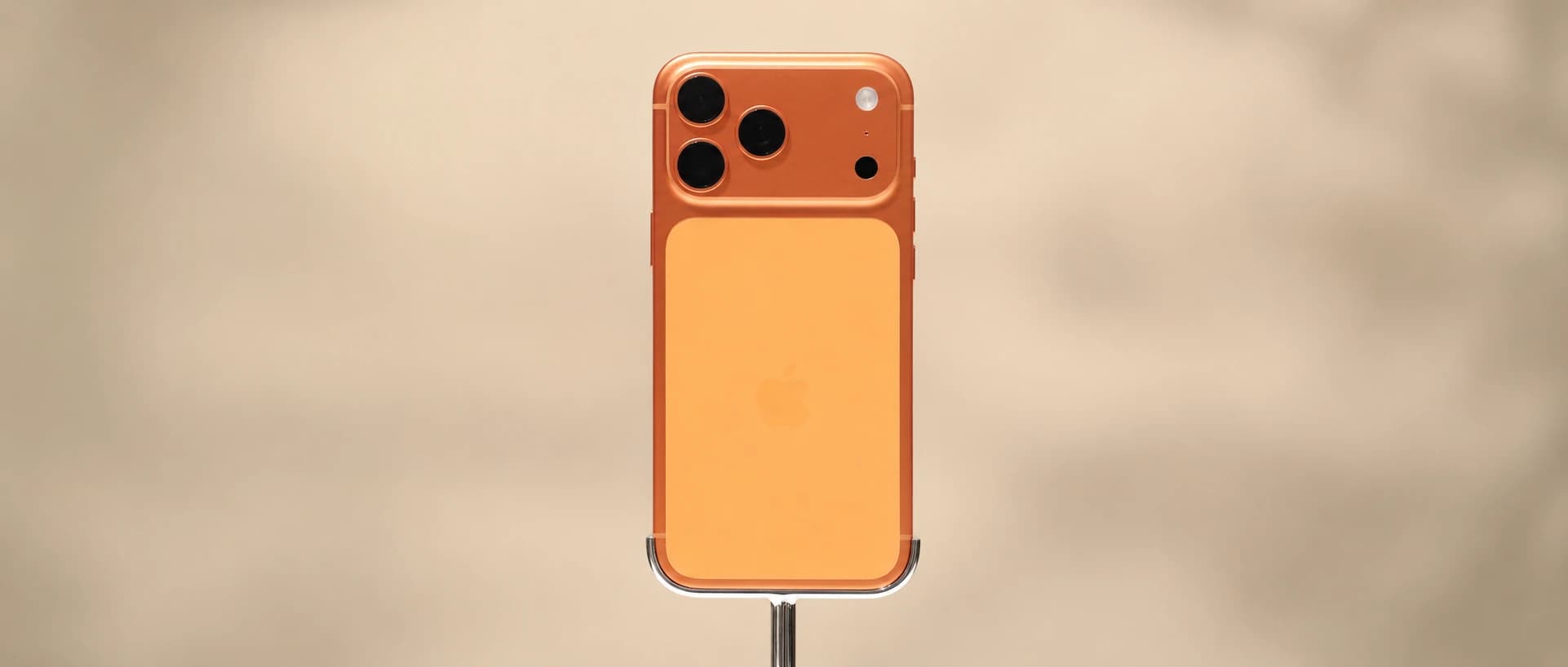
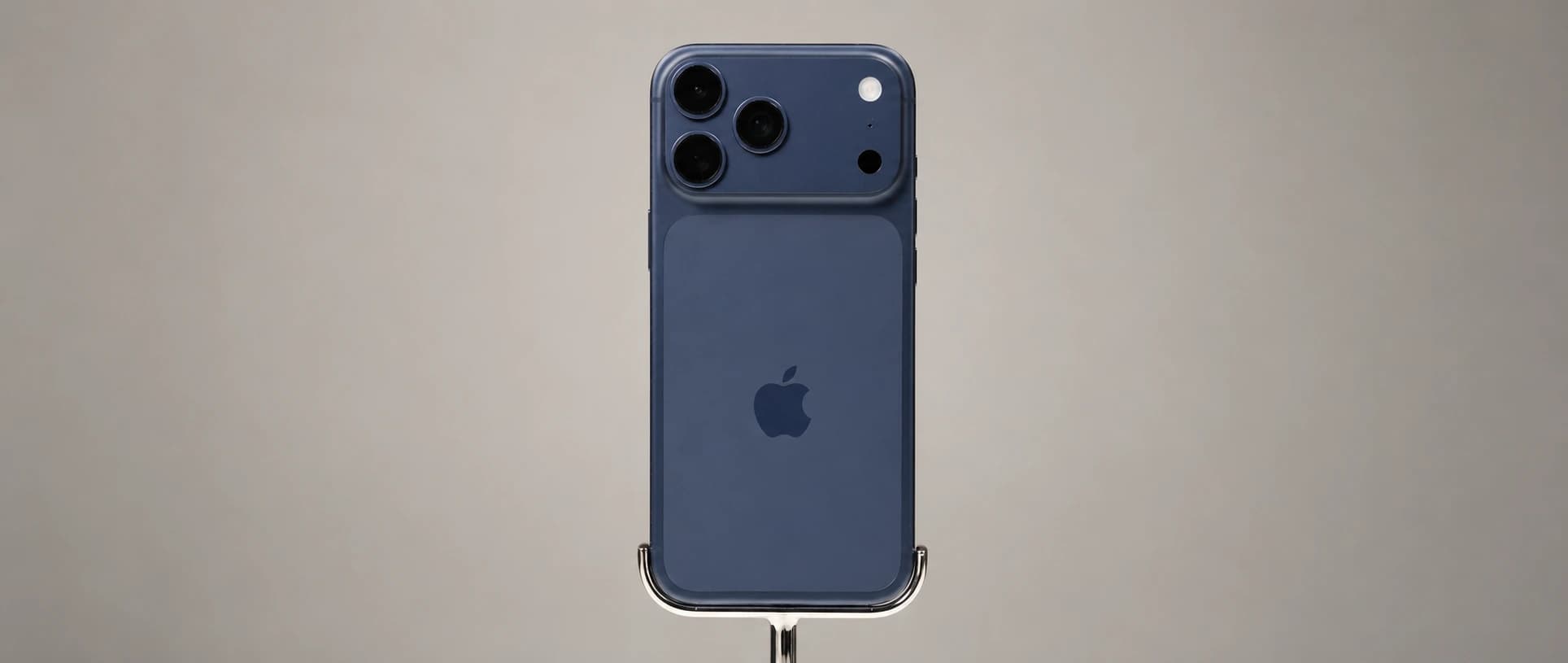
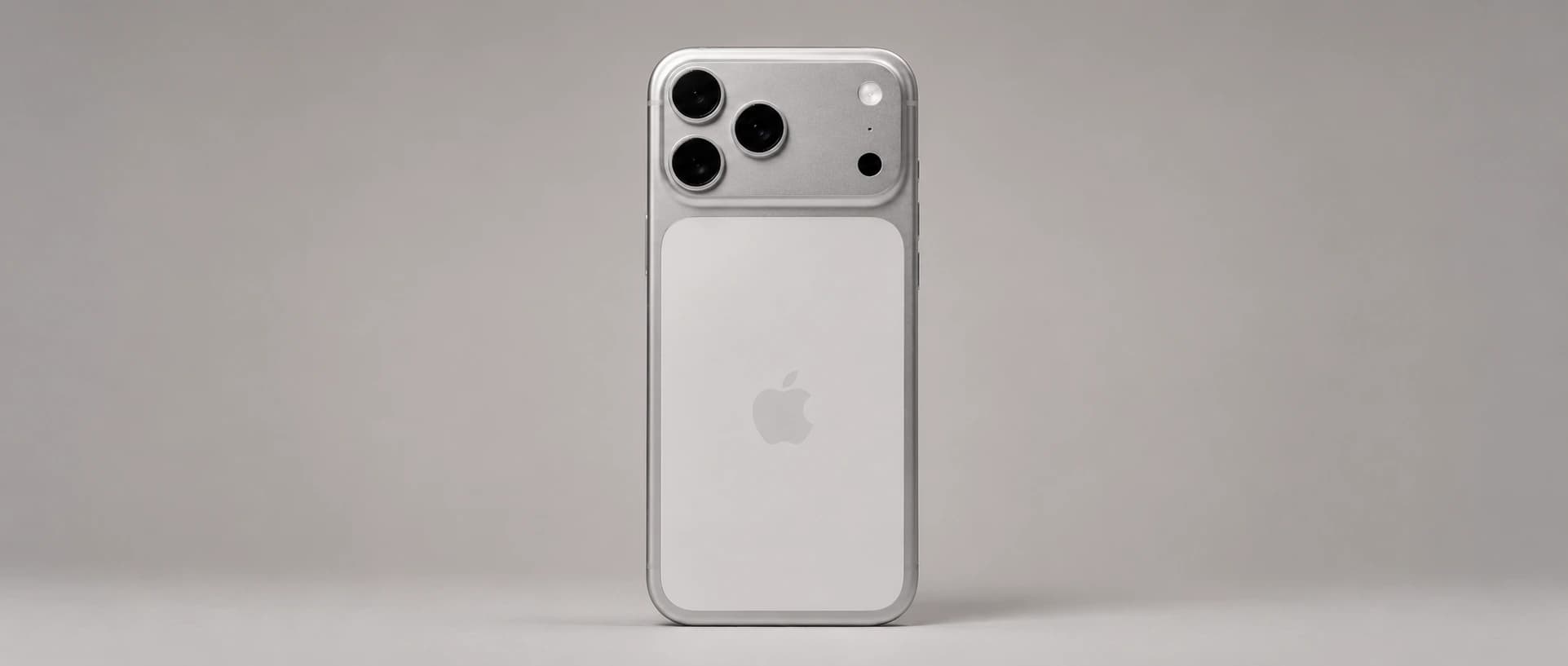
Colours are Silver, Cosmic Orange and Deep Blue, and the choice is not purely cosmetic this year. Cosmic Orange is the shade that durability testers and early owners found most prone to showing edge wear on the anodized aluminium, which we cover in detail below. No charger ships in the box, and hitting the quoted charging speeds requires a 40 W or better adapter you supply yourself.
02Design, materials and the scratch problem
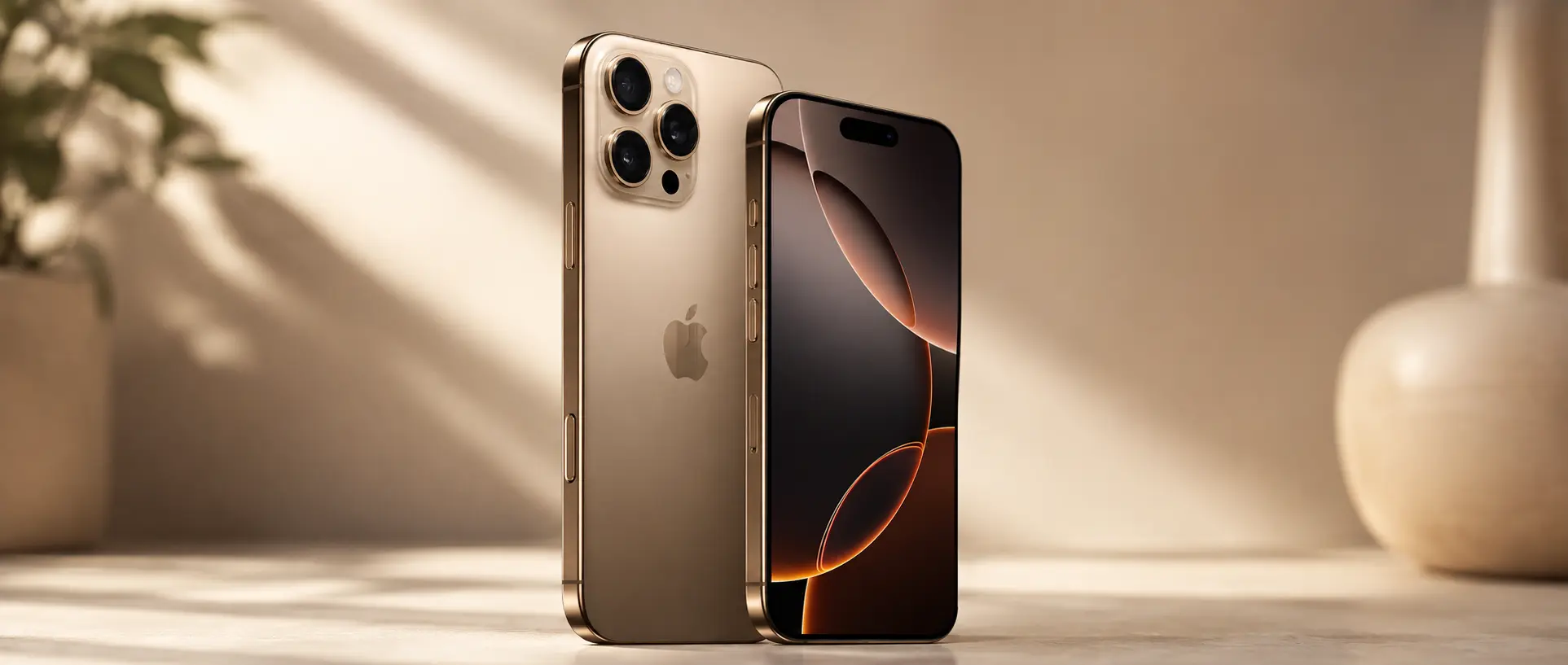
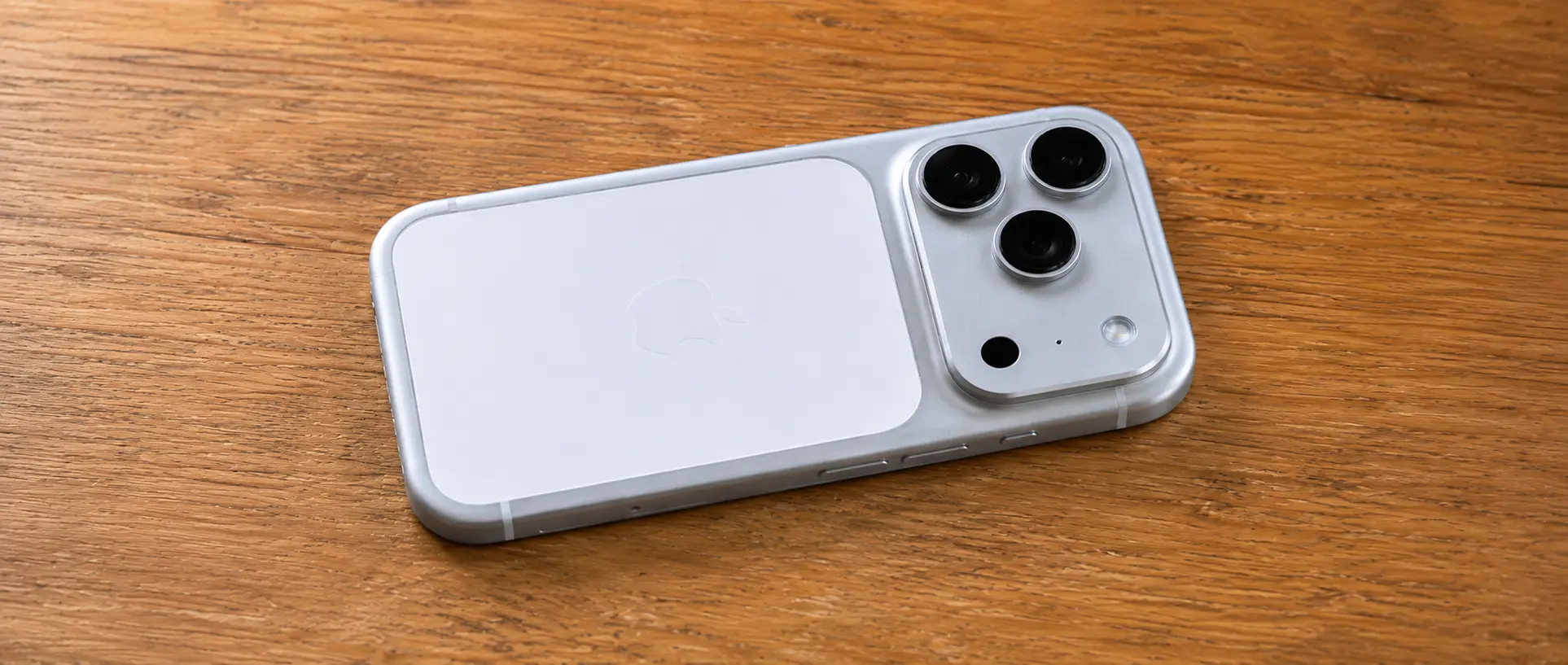
The iPhone 17 Pro is 150 × 71.9 × 8.75 mm and 206 g, which makes it slightly thicker than its predecessor, and Apple has swapped the titanium frame of the last two generations for an aluminium unibody. Ceramic Shield 2 covers the front, with a claimed 3x improvement in scratch resistance, and Ceramic Shield now protects the back as well. IP68 is rated to 6 m for 30 minutes. The wide, two-tone camera plateau across the top of the rear panel is the most divisive design change Apple has made to a Pro iPhone in years.
The material change is defensible on engineering grounds: aluminium conducts heat far better than titanium, and it is a large part of why the vapor chamber works as well as it does. It is much less defensible on durability grounds. Within days of release, owners and durability testers reported that the anodized finish chips and scuffs at the machined edges of the camera plateau far more readily than titanium ever did, and iFixit joined the outlets confirming the behaviour. The nickname stuck: scratchgate.
Apple's response was partial. The company attributed some of the marks seen on display units to material transfer from worn MagSafe stands in retail stores, which is a real phenomenon and does rub off — but it does not account for the edge chipping that testers reproduced on fresh units. Our position is practical rather than forensic: this is a phone that wants a case, and if you will not use one, Silver and Deep Blue hide wear noticeably better than Cosmic Orange does.
- 150 × 71.9 × 8.75 mm, 206 g — the Pro Max is 163.4 × 78.0 × 8.75 mm and 233 g
- Aluminium unibody replaces titanium; better heat conduction, worse edge durability
- Ceramic Shield 2 front with a 3x scratch resistance claim, Ceramic Shield on the back
- IP68, rated to 6 metres for 30 minutes
- Silver, Cosmic Orange and Deep Blue — orange shows edge wear most clearly
03A19 Pro: 3nm N3P, 12 GB and a vapor chamber
The A19 Pro is built on TSMC's N3P process and pairs a 6-core CPU — two performance cores at roughly 4.26 GHz and four efficiency cores at about 2.60 GHz — with a 6-core GPU that carries Neural Accelerators in each core, an iPhone first. A 16-core Neural Engine and 12 GB of RAM round it out, the latter a meaningful jump for anyone who keeps a lot of apps and Safari tabs resident. Geekbench 6 returns 3,834 single-core and 9,988 multi-core, with GSMArena measuring 9,923 multi on its own unit.
Those numbers are roughly 13% up on the A18 Pro in single-core and about 20% up in multi-core, and the single-core figure is not close: the Galaxy S25 Ultra manages 3,031 and the Pixel 10 Pro 2,335 on the same test. Graphics is where the vapor chamber earns its place. 3DMark Wild Life Unlimited hits 158.37 fps against 109.33 fps for the iPhone 16 Pro, a 45% gain, with Wild Life Extreme at 5,868 and AnTuTu v10 around 2,430,575. The Galaxy S25 Ultra actually edges ahead in Wild Life Unlimited at 161.66 fps, so this is not a clean sweep — but it is the sustained behaviour that separates them.
That vapor chamber is laser-welded and filled with deionized water, and Apple claims up to 40% better sustained performance than the iPhone 16 Pro. In practice the phone holds high clocks through repeated runs where previous Pros visibly stepped down, and surface temperature stays in a range you can hold comfortably. Real work follows the synthetics: an Adobe Premiere Rush transcode finishes in 22 seconds, against 21 seconds on the 16 Pro, 52 seconds on the Galaxy S25 Ultra and 2 minutes 19 seconds on the Pixel 10 Pro. The 16 Pro can match a single short burst; it cannot match a long one.
Geekbench 6 multi-core
points — higher is betterSource: AURAVA Hardware Desk; GSMArena measured 9,923 on its own unit
04The 6.3-inch Super Retina XDR panel
The display is a 6.3-inch LTPO Super Retina XDR OLED at 2622 × 1206 and 460 ppi, with ProMotion scaling adaptively from 1 Hz to 120 Hz and an always-on mode that uses the bottom of that range. Apple quotes 1,000 nits typical, 1,600 nits peak in HDR and 3,000 nits peak outdoors. Ceramic Shield 2 sits on top with the 3x scratch resistance claim, and the anti-reflective properties are a genuine improvement in direct sun.
Our measurements land close to but below the headline figures, which is normal for peak-brightness claims measured across a small window. Manual maximum is 818 nits, with 1,012 nits available when auto-brightness is allowed to boost, and Tom's Guide recorded 1,555 nits in HDR content against Apple's 1,600 figure. The 3,000-nit outdoor peak measured 2,755 nits at 15% APL — short of the claim but still comfortably readable in any lighting we tried.
Colour is the more interesting result. DCI-P3 coverage measured 80.2%, which sounds low next to the Galaxy S25 Ultra's 107.3% until you understand what those numbers mean: Samsung is oversaturating well beyond the P3 gamut, while Apple is tracking it accurately and refusing to push past it. For photo and video work, where what you see needs to survive export, Apple's calibration is the one you want. For a phone that pops on a shop shelf, Samsung's is.
05Three 48 MP sensors and a much better front camera
For the first time every rear camera on a Pro iPhone is 48 MP. The main Fusion camera is f/1.78 at 24 mm with a 1/1.28-inch sensor, 1.22 µm pixels, sensor-shift OIS and dual PDAF. The ultra-wide is 48 MP f/2.2 at 13 mm covering 120 degrees with PDAF for macro. The telephoto is a 48 MP tetraprism f/2.8 with 3D sensor-shift OIS. LiDAR and a dual-LED dual-tone flash complete the array. The practical effect of the uniform resolution is that switching lenses no longer feels like switching cameras — the ultra-wide and telephoto hold detail in a way they simply did not before.
The telephoto is also this review's clearest regression. It sits at 100 mm for 4x optical, down from the 5x/120 mm tetraprism on the iPhone 16 Pro Max, and while Apple offers an 8x setting described as optical quality, that is a crop from the 48 MP sensor rather than a true optical step. Apple counts the full range as 16x of optical-quality reach. Night portraits on the telephoto have also been dropped. If your photography leans on distant subjects — stage, sport, wildlife — this is a step backwards, and it is worth weighing against everything else the phone does better.
The front camera is the surprise. It is an 18 MP Center Stage unit at f/1.9 with autofocus and, crucially, a square multi-aspect sensor: the phone can shoot a landscape selfie or reframe a group shot without you rotating it, and it tracks subjects as they move in and out of frame. Video remains best in class, with 4K Dolby Vision up to 120 fps, 1080p slow motion to 240 fps, ProRes RAW, Apple Log 2, genlock for multi-camera shoots, 3D spatial video and Cinematic mode at 4K/30. Nothing on Android matches that production toolkit end to end.
Camera hardware at a glance
| Main | 48 MP Fusion, f/1.78, 24 mm, 1/1.28", 1.22 µm, sensor-shift OIS, dual PDAF |
|---|---|
| Ultra wide | 48 MP, f/2.2, 13 mm, 120° field of view, PDAF with macro |
| Telephoto | 48 MP tetraprism, f/2.8, 100 mm (4x optical), 3D sensor-shift OIS |
| Extended reach | 8x optical-quality crop from the 48 MP tele; 16x total optical-quality range |
| Front | 18 MP Center Stage, f/1.9, square multi-aspect sensor, autofocus, auto-reframing |
| Depth and flash | LiDAR scanner, dual-LED dual-tone flash |
| Video | 4K Dolby Vision up to 120 fps, 1080p/240 slo-mo, ProRes RAW, Apple Log 2, genlock |
06Battery life and charging
Apple does not publish cell capacities, so the figures in circulation come from regulatory filings and teardowns: approximately 3,988 mAh in the nano-SIM version and 4,252 mAh in the eSIM-only variant, which has more internal room. Apple's own claim is up to 33 hours of video playback, against up to 39 hours for the Pro Max and its roughly 4,823 to 5,088 mAh cell. The EU energy label rates the phone at 47 hours of endurance and 1,000 charge cycles.
Our results track those claims. Tom's Guide web surfing returns 15 hours 32 minutes against 14 hours 7 minutes for the iPhone 16 Pro and 14 hours 27 minutes for the Galaxy S25 Ultra, while GSMArena's Active Use score lands at 15 hours 23 minutes. That is roughly an hour and a half over the 16 Pro, which is a genuine generational improvement rather than the ten or twenty minutes these upgrades usually deliver. The Pro Max stretches further still, to about 17 hours 42 minutes and 17 hours 58 minutes on the same two tests.
Charging is the fastest Apple has shipped. With a 40 W or better adapter the phone reaches 40% in 15 minutes and 70 to 72% in half an hour, filling completely in 1 hour 18 minutes — the iPhone 16 Pro managed 29% and 56% at those same checkpoints. Apple quotes 50% in 20 minutes, which our runs comfortably beat. Peak draw sits around 36 to 40 W and settles near 30 W sustained. MagSafe and Qi2 go up to 25 W for 50% in 30 minutes, and there is 4.5 W reverse wired charging for accessories. No adapter is included.
Charge time to 100% from empty
minutes — lower is betterSource: AURAVA Hardware Desk, 40 W USB-C adapter
07iOS 26, connectivity and the Apple Intelligence gap
The phone shipped with iOS 26 and its Liquid Glass redesign, and is on iOS 26.6 at the time of writing. The visual overhaul is the most substantial since iOS 7, and after eleven months of updates the early rough edges around legibility and contrast have largely been sanded down. What has not improved on schedule is Apple Intelligence: the feature set still trails what Google and Samsung ship on their flagships, and the rebuilt, more capable Siri has slipped again. Buy this phone for what it does today, not for a roadmap.
Connectivity is a strong year. 5G covers sub-6 and mmWave through a Qualcomm Snapdragon X80 modem, while Apple's own N1 chip now handles Wi-Fi, Bluetooth and Thread — bringing Wi-Fi 7, Bluetooth 6 and second-generation ultra wideband. Satellite SOS is present, and the USB-C port is finally USB 3.2 Gen 2 at 10 Gbps with DisplayPort output, which matters enormously if you are offloading ProRes RAW footage rather than waiting on USB 2.0 speeds.
Two smaller notes round out the software and hardware picture. Speaker loudness is slightly down on the iPhone 16 Pro, which is audible in a side-by-side comparison and irrelevant otherwise. And with 12 GB of RAM, app reloading behaviour is noticeably better than on 8 GB Pros — background apps and Safari tabs survive far longer, which is the sort of change that does not appear in a benchmark chart but shows up every day.
08How it compares
Against the Galaxy S26 Ultra at $1,299.99, the trade is compute versus reach and screen. Samsung wins Geekbench 6 multi-core at 11,566, brings a 6.9-inch 1440p LTPO AMOLED 2X at 2,600 nits, a 5,000 mAh battery with 60 W wired charging, and a four-camera array topped by a 200 MP main and a 50 MP 5x periscope. Apple wins single-core by a wide margin, wins sustained thermal behaviour, wins video production tooling, and costs $200 less. If you shoot long lenses, Samsung's periscope is the more useful hardware.
The Pixel 10 Pro undercuts both at $999 for 128 GB and matches the iPhone's 6.3-inch size with a brighter 3,300-nit panel and a larger 4,870 mAh cell. Its Tensor G5 is not in the same performance conversation — 6,375 in Geekbench 6 multi and 2 minutes 19 seconds on our Premiere Rush transcode against 22 seconds here — but Google's computational photography and its AI feature set are ahead of Apple's, and its 48 MP 5x telephoto reaches further.
The most awkward competitor remains Apple's own. The iPhone 17 Pro Max is $1,199, runs the same A19 Pro to 10,118 in multi-core, carries identical cameras, and adds roughly two hours of endurance and a 6.9-inch display for $100. Reception across the industry has been strongly positive — TechRadar 4.5 to 4.8 out of 5, Tom's Guide Editor's Choice at about 4.5, Trusted Reviews 4.5, PCMag Editors' Choice 4.5, The Guardian a full 5, and a Consumer Reports recommendation, with no major outlet landing below roughly 4 out of 5. The recurring summary is that this is a phone that reads as boring on paper and transformative in use.
Head to head
| Specification | iPhone 17 Pro | Galaxy S26 Ultra | Pixel 10 Pro | iPhone 17 Pro Max |
|---|---|---|---|---|
| Price | $1,099 / 256 GB | $1,299.99 | $999 / 128 GB | $1,199 / 256 GB |
| Chipset | A19 Pro, 3 nm N3P | Snapdragon 8 Elite Gen 5 | Tensor G5, 3 nm | A19 Pro, 3 nm N3P |
| Display | 6.3" LTPO OLED, 1–120 Hz, 3,000 nits claimed | 6.9" LTPO AMOLED 2X, 1440p, 120 Hz, 2,600 nits | 6.3" LTPO OLED, 120 Hz, 3,300 nits | 6.9" LTPO OLED, 120 Hz, 3,000 nits |
| Geekbench 6 multi | 9,988 | 11,566 | 6,375 | 10,118 |
| Rear cameras | 48 MP main + 48 MP 4x tele + 48 MP UW | 200 MP main + 50 MP 5x periscope + 10 MP 3x + 50 MP UW | 50 MP main + 48 MP 5x tele + 48 MP UW | 48 MP main + 48 MP 4x tele + 48 MP UW |
| Battery and charging | ~3,988–4,252 mAh, 40 W wired / 25 W wireless | 5,000 mAh, 60 W wired / 25 W wireless | 4,870 mAh, 30 W wired | ~4,823–5,088 mAh, 40 W wired / 25 W wireless |
| Weight | 206 g | 214 g | ~207 g | 233 g |
Full specifications
Processor, memory and cooling
| Chipset | Apple A19 Pro, 3 nm TSMC N3P |
|---|---|
| CPU | 6-core — 2 performance cores at ~4.26 GHz, 4 efficiency cores at ~2.60 GHz |
| GPU | 6-core, with Neural Accelerators in each core (an iPhone first) |
| Neural Engine | 16-core |
| Memory | 12 GB RAM |
| Storage | 256 GB / 512 GB / 1 TB (2 TB is Pro Max only) |
| Cooling | Laser-welded vapor chamber with deionized water; Apple claims up to 40% better sustained performance than the 16 Pro |
Display
| Panel | 6.3-inch LTPO Super Retina XDR OLED |
|---|---|
| Resolution | 2622 × 1206, 460 ppi |
| Refresh rate | ProMotion, adaptive 1–120 Hz, Always-On display |
| Brightness (claimed) | 1,000 nits typical, 1,600 nits HDR peak, 3,000 nits outdoor peak |
| Brightness (measured) | 818 nits manual, 1,012 nits auto, 1,555 nits HDR, 2,755 nits at 15% APL |
| Colour | 80.2% DCI-P3 coverage — accurate rather than oversaturated |
| Cover glass | Ceramic Shield 2, 3x scratch resistance claim |
Cameras
| Main | 48 MP Fusion, f/1.78, 24 mm, 1/1.28", 1.22 µm, sensor-shift OIS, dual PDAF |
|---|---|
| Ultra wide | 48 MP, f/2.2, 13 mm, 120°, PDAF with macro |
| Telephoto | 48 MP tetraprism, f/2.8, 100 mm = 4x optical, 3D sensor-shift OIS |
| Zoom range | 8x optical-quality sensor crop; 16x total optical-quality range |
| Front camera | 18 MP Center Stage, f/1.9, square multi-aspect sensor, autofocus, auto-reframing |
| Extras | LiDAR scanner, dual-LED dual-tone flash |
| Video | 4K Dolby Vision to 120 fps, 1080p to 240 fps, ProRes RAW, Apple Log 2, genlock, 3D spatial video, Cinematic 4K/30 |
Battery and charging
| Capacity | ~3,988 mAh (nano-SIM) / ~4,252 mAh (eSIM-only) — from regulatory filings and teardowns, not published by Apple |
|---|---|
| Claimed playback | Up to 33 hours of video (Pro Max: up to 39 hours) |
| Measured endurance | 15 h 32 m web surfing (Tom's Guide); 15 h 23 m Active Use (GSMArena) |
| EU rating | 47 hours endurance, 1,000 charge cycles |
| Wired charging | 40% in 15 min, 70–72% in 30 min, full in 1 h 18 m with a 40 W+ adapter; peak ~36–40 W |
| Wireless | MagSafe / Qi2 up to 25 W — 50% in 30 minutes |
| Reverse charging | 4.5 W wired |
Build, connectivity and software
| Dimensions | 150 × 71.9 × 8.75 mm, 206 g (Pro Max: 163.4 × 78.0 × 8.75 mm, 233 g) |
|---|---|
| Materials | Aluminium unibody, Ceramic Shield 2 front, Ceramic Shield back |
| Durability | IP68, rated 6 m for 30 minutes |
| Colours | Silver, Cosmic Orange, Deep Blue |
| Cellular | 5G sub-6 and mmWave, Qualcomm Snapdragon X80 modem, satellite SOS |
| Wireless | Apple N1 chip — Wi-Fi 7, Bluetooth 6, Thread, UWB Gen 2 |
| Wired I/O | USB-C 3.2 Gen 2 at 10 Gbps with DisplayPort output |
| Software | Shipped with iOS 26 (Liquid Glass); iOS 26.6 at the time of writing |
Verdict
Apple has spent two or three cycles shipping Pro iPhones whose silicon was better than the chassis around it could sustain. The iPhone 17 Pro fixes that. The laser-welded vapor chamber is not marketing garnish: it is why Geekbench 6 multi-core lands at 9,988 instead of dropping into the eights on the second run, why 3DMark Wild Life Unlimited hits 158.37 fps against 109.33 fps on the 16 Pro, and why the phone stays merely warm during a 4K120 shoot. Apple claims up to 40% better sustained performance versus the 16 Pro, and unusually for a thermal claim, our repeat runs do not contradict it.
The battery result is the one that will change how people use the phone. 15 hours 32 minutes in Tom's Guide web-surfing testing and 15 hours 23 minutes in GSMArena Active Use is roughly an hour and a half over the iPhone 16 Pro — a real generational jump rather than a rounding error, achieved partly by the thicker 8.75 mm body and partly by the aluminium frame conducting heat away from the cell. Charging follows suit: 40% in 15 minutes, 70–72% in half an hour and a full charge in 1 hour 18 minutes, against 29% and 56% at the same marks on the 16 Pro.
So the score is 88, and the reservations are specific rather than general. The anodized aluminium unibody chips at the camera-plateau edges in a way titanium did not, and Cosmic Orange shows it worst; buy a case, and prefer Silver or Deep Blue if you will not. The telephoto going from 5x/120 mm to 4x/100 mm is a real regression for anyone who shoots distant subjects, and the 8x setting is a sensor crop, not optics. And at $1,099 the Pro Max sits $100 away with a 6.9-inch panel and another two hours of endurance. If you want a 6.3-inch flagship that no longer runs out of thermal or battery headroom before you run out of day, this is the best one on sale.
Buy it if
- Anyone who wants flagship performance in a 6.3-inch body rather than a 6.9-inch one
- Heavy camera users who shoot 4K120 Dolby Vision, ProRes RAW or Apple Log 2 for long stretches
- iPhone 14 Pro and 15 Pro owners, for whom the battery and thermal gains compound
- People who take a lot of selfies or video calls and will use the auto-reframing Center Stage camera
Skip it if
- You own an iPhone 16 Pro and are happy with its battery — the year-on-year camera gains are modest
- You shoot a lot of long-range telephoto; the 16 Pro Max 5x lens reaches further than this 4x
- You refuse to use a case — the aluminium finish will pick up marks at the camera plateau
- You can stretch $100 further, in which case the Pro Max is the better value at $1,199
Sources and further reading
- Apple — iPhone 17 Pro technical specifications
- GSMArena — Apple iPhone 17 Pro
- Tom's Guide — iPhone 17 Pro review
- TechRadar — iPhone 17 Pro review
- 9to5Mac — Apple responds to iPhone 17 Pro scratch and durability concerns
Figures quoted from third-party laboratories are attributed inline. Prices were correct at the time of publication and change often.